
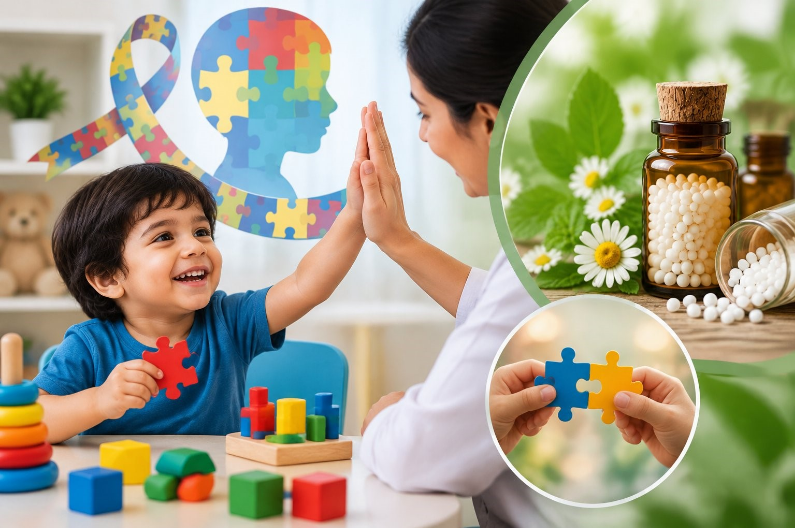
Every child with autism is unique. Because of this, families often seek gentle, individualized support. Homeopathic care for autism support offers a tailored approach. It focuses on each child’s needs. With personalised homeopathy for autism, children get care that fits their own patterns. In addition, this gentle autism support looks at the whole child, not just symptoms. As a result, individualized autism care can help families feel more supported and understood.
Understanding Autism Beyond Symptoms
Autism is not the same for every child. For example, some children may find it hard to talk or make friends. Others may react strongly to sounds or lights. Many children have their own ways of learning and behaving. Because of this, autism can affect:
- Communication and language skills
- Social interaction with others
- Sensory responses to touch, sound, or light
- Learning patterns and interests
- Behaviour, such as repeating actions
- Sleep and daily routines
Therefore, understanding each child’s experience is important. Autism is a spectrum, which means every child is different.
How Homeopathic Care Approaches Autism Support
Homeopathy looks at the whole child. First, a homeopath will spend time learning about your child’s physical, emotional, and behavioural patterns. They also look at development and daily life. Because every child is unique, homeopathic care for autism support is always personalised. This means the care plan is made just for your child, not copied from others.
Child’s Behavioural Patterns
Homeopathy doctors pay close attention to how a child behaves. For example, they look at:
- How the child reacts to changes in routine
- Emotional responses to stress or new situations
- Attention span and focus
- Repetitive actions or habits
- How the child interacts with family members
Because these patterns are different for each child, the care is always tailored.
Emotional and Sensory Responses
Many children with autism have strong feelings about their surroundings. For instance, some may feel upset by loud noises or bright lights. Others may seek comfort in certain textures or objects. Homeopaths consider:
- Sensitivity to sound, light, or touch
- Comfort levels in different places
- Emotional reactions to people or events
- Ways the child copes with stress
As a result, remedies are chosen to match these unique responses.
Sleep and Daily Routine Patterns
Sleep and daily habits can affect a child’s well-being. Some children may have trouble falling asleep or staying asleep. Others may feel tired during the day. Homeopaths look at:
- Bedtime routines and sleep quality
- Energy levels throughout the day
- Changes in behaviour at different times
- How routines help or challenge the child
Because these patterns matter, they are part of the care plan.
Individual Constitution and Overall Health
Homeopathy believes each person has a unique constitution. This means every child has their own health patterns and physical traits. Homeopaths consider:
- Appetite and food preferences
- Physical tendencies, such as frequent colds or allergies
- General lifestyle and activity levels
- Family health history
Therefore, the chosen remedies support the child’s overall health, not just autism-related concerns.
Why Personalised Homeopathic Care Matters in Autism Support
Personalised care helps children with autism feel understood. Because every child is different, a one-size-fits-all approach does not work. Instead, homeopathic care:
- Respects each child’s unique needs
- Supports families in daily life
- Promotes gentle, non-invasive support
- Encourages positive changes over time
As a result, families often feel more hopeful and confident in their child’s journey.
Supporting Children Through a Holistic Approach
Families can help their children in many ways. For example, you can:
- Keep daily routines steady and predictable
- Encourage open communication, even with simple words or gestures
- Create a calm, supportive environment at home
- Celebrate small achievements and progress
- Understand and respect your child’s sensory needs
Because these steps support the whole child, they work well with homeopathic care.
The Homoeocare Approach to Autism Support
At Homoeocare, every child’s story matters. First, detailed assessments help understand each child’s strengths and challenges. Then, a personalised care plan is created. This plan includes gentle remedies and practical support for families. As a result, children receive care that fits their unique needs. Families are also guided at every step, making the journey smoother and more hopeful.
Frequently Asked Questions
- Is homeopathic care personalised for children with autism?
Yes, homeopathic care is always tailored to each child’s needs and patterns.
- Does homeopathy follow the same approach for every child with autism?
No, every child is unique. Homeopathy creates a plan based on the child’s own experiences and health.
- What factors are considered during a homeopathic evaluation?
Homeopaths look at behaviour, emotions, sleep, routines, health history, and sensory responses.
- Can parents support their child’s development at home?
Yes, by keeping routines, encouraging communication, and creating a supportive environment, parents can help their child grow.
- How does Homoeocare approach autism support?
Homoeocare uses detailed assessments and personalised care plans for each child, supporting both children and families.
Conclusion
In summary, patience and understanding are key in autism support. Personalised homeopathic care can help children and families feel more confident. At Homoeocare, the focus is on gentle, holistic support for every child. For the best results, consult a qualified homeopathic specialist for personalized guidance on autism support.