
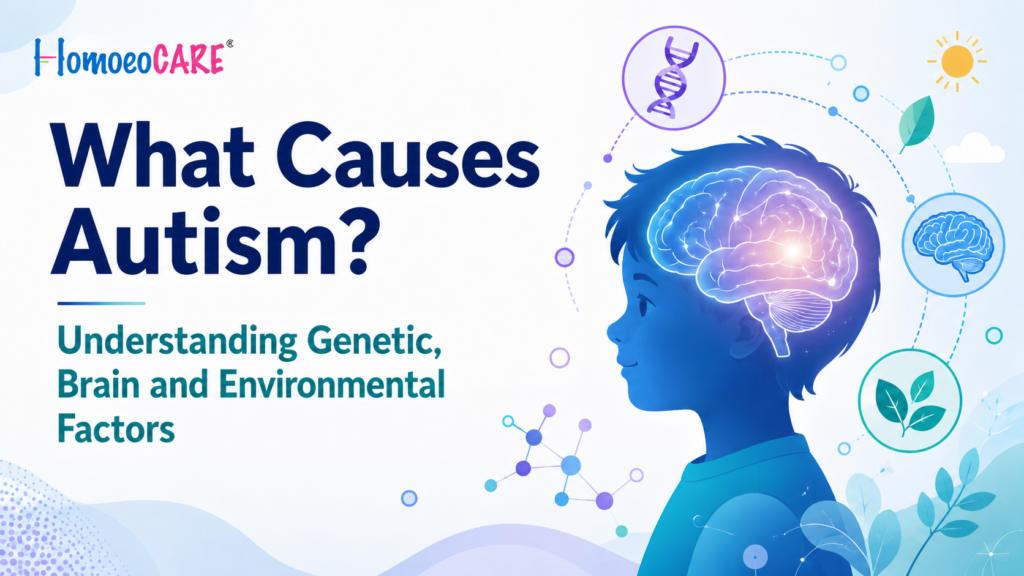
Autism Spectrum Disorder (ASD) does not have a single identifiable cause. According to current medical understanding, it is a complex neurodevelopmental condition influenced by multiple genetic, neurological, and environmental factors affecting early brain development.
Understanding the causes of autism helps parents recognize early concerns and take timely steps for evaluation and support.
1. Genetic Influence in Autism
Clinical studies suggest that genetics plays an important role in autism development.
- Autism may run in families
- Multiple gene variations may be involved
- Genes influence brain development and neural communication
However, there is no single gene responsible for autism, and it usually develops due to a combination of genetic influences.
Concerned about your child’s developmental progress?
Get expert guidance from our autism specialist for early evaluation and clarity.
2. Brain Development and Neurological Factors
Research shows that autism is associated with differences in early brain development, such as:
- Altered neural connectivity patterns
- Differences in communication between brain regions
- Atypical early brain growth patterns
These neurological differences may affect:
- Speech development
- Behavioural responses
- Social interaction skills
3. Environmental and Prenatal Factors
Certain environmental factors during pregnancy or early development may increase the risk of autism, including:
- Maternal infections during pregnancy
- Exposure to toxins or pollutants
- Birth complications
- Premature delivery or low birth weight
These factors may interact with genetic predisposition and influence brain development.
Medical Myths About Autism Causes
Scientific evidence clearly shows that:
- Vaccines DO NOT cause autism
- Parenting style DOES NOT cause autism
- Emotional neglect DOES NOT cause autism
Autism is a biological neurodevelopmental condition, not caused by external parenting factors.
Risk Factors Associated with Autism
Some associated risk factors include:
- Family history of ASD
- Advanced parental age
- Genetic syndromes
- Pregnancy or birth complications
These factors only indicate increased likelihood, not confirmation of autism.
Key Medical Understanding
Autism is a multifactorial neurodevelopmental condition, meaning it results from the interaction of genetic and environmental influences affecting early brain development.
It is important to understand that autism is not a disease, but a developmental difference that requires understanding, early detection, and support.
If you notice developmental delays or behavioural differences in your child, early evaluation is very important.
While the exact causes of autism are still being researched, early recognition of developmental differences can significantly improve outcomes.
If you are concerned about your child’s communication or behaviour, consult a specialist for proper evaluation and support.